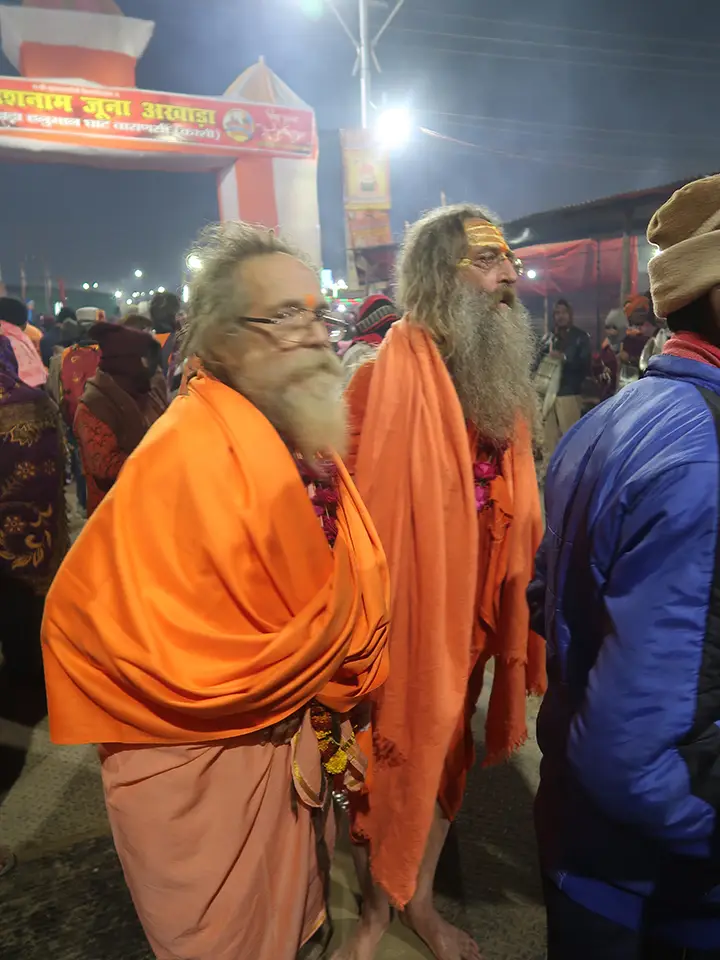
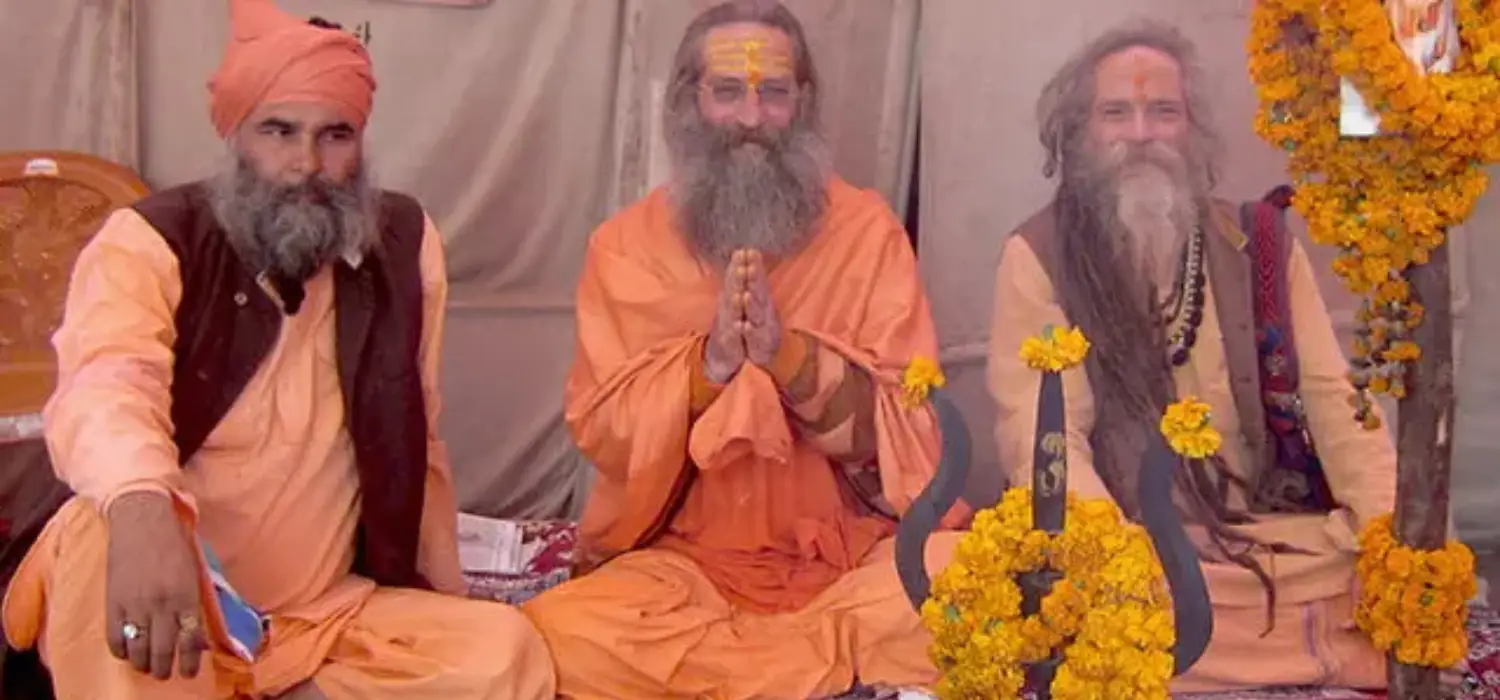
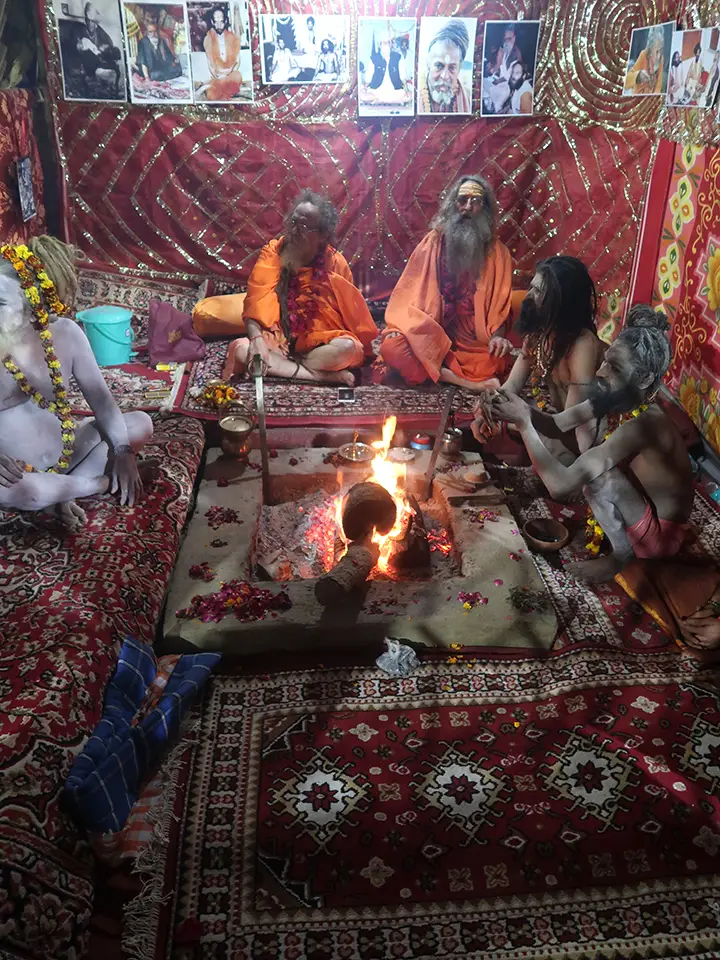
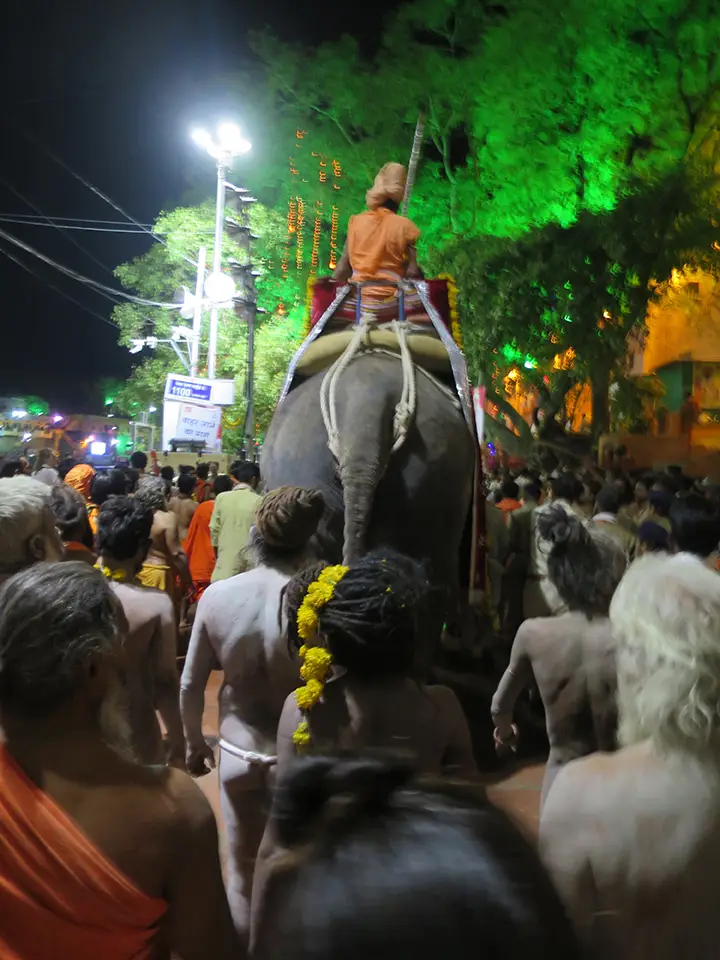
For 18 hours, beginning at 2:30 am when the auspicious time for the sacred bathing begins, this massive flood of the faithful moves in a slow, steadfast, overwhelming current towards the main bathing ghat of Datt Akhara on the banks of River Kshipra. 15 million people of all colors, religions, classes, castes, genders, and ages, all walking towards the river.
All of them … lost.
Their diverse identities forged into one unyielding mass.
Animation
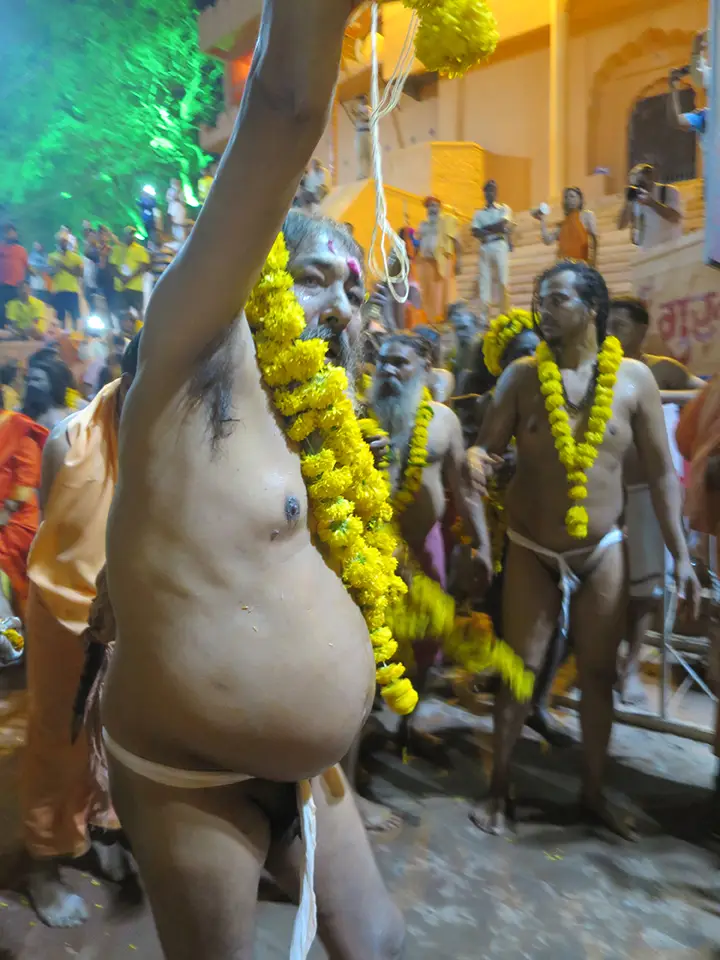
Piercing this current, the Naga Babas of Juna Akhara accompanying our devata, Guru Dattatreya with flower draped bhala spears, lead a procession of all the mahatmas of India & their devotees, that will continue until after sunset.
This is known as the Shahi Snan, the Imperial Bath, conquering the 4 directions.
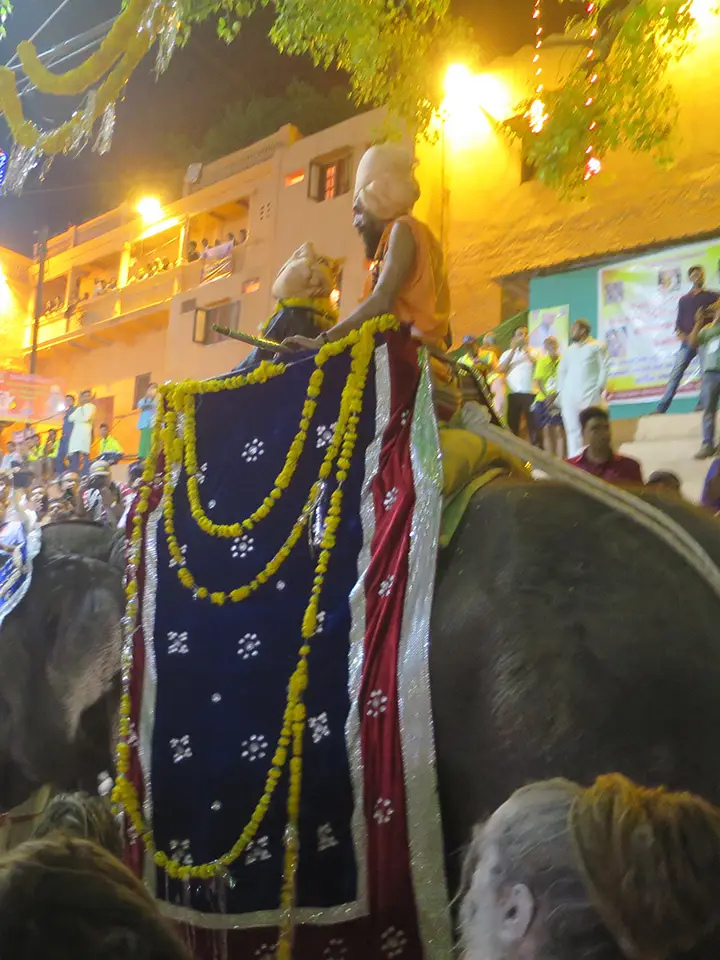
Completing the 3.5 kilometer procession, the Naga Babas accompanying Guru Dattatreya arrive on the ghat as the Pir of Datt Akhara reaches on his elephant.
The Pir’s procession meets the Devata’s julus at the entrance to the ghat.
Walking next to the elephant in the midst of the now ecstatic Naga Babas, I appreciate just how well trained was that elephant & how disciplined he was in all that chaos, for one little swing of his tail, and dozens of us would be knocked down the steps & into the Kshipra.