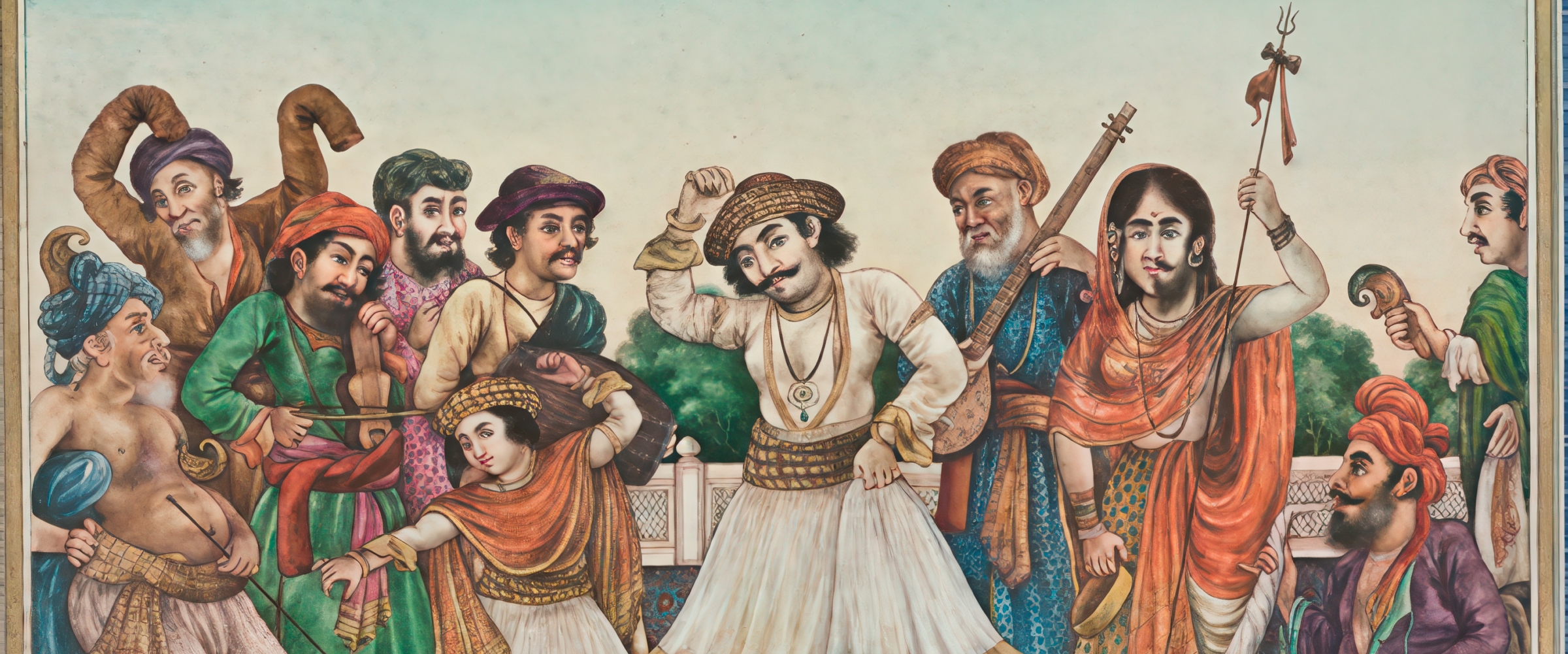
III · Sacred Speech & Sacred Music
The inquiry now spans sacred speech and sacred music. I am joined by my friend Peter Pannke, of the Malik Gharana of Bihar and a master of Dhrupad, who came to the Sufis of Pakistan as I came to the Naga Babas.
After returning to my guru’s ashram in Rajasthan after a year in Berkeley with Prof. Fritz Staal, my own assumptions started confronting me when I realised that there were two streams of knowledge that seemed never to meet: the Western Academy and the oral tradition. I take up Edward Said’s Orientalism, with as much argument as agreement, and I single out the assumptions that matter most: the Enlightenment’s promotion of the human sciences; the privileging of the printed and published text, and of religious doctrine; the privileging of experience, after William James; the reading of history as a single line of evolution; and the metaphor of the machine, left to us by the industrial revolution.
Peter then turns to music. He asks what music is, and finds the sacred in how we perceive sound, as he finds sound itself to be movement and creative energy before it is anything else. He sets the tonic, Sa, the note that gives birth to all the others, beside older modes of sound: the middle-note music still heard from Tibetan monks and the didgeridoo, and the Gandharva music said to descend from above. And he comes to this: music escapes every notation and every recording, and lives only in the act of one person sounding it and another taking it up. The score and the disc are to music what the printed text is to the oral tradition.


